How to Secure Sliding Doors in 8 Simple Steps
- Ted Mathia
- 12 minutes ago
- 6 min read

A sliding glass door can bring in light, open up a patio, and make daily life more convenient. It can also be a vulnerable entry point if its latch, frame, glass, and surrounding area are not protected. Learning how to secure sliding doors means looking beyond the factory lock and building a few layers of protection that work together.
For most homes and small businesses, the best approach is practical: reinforce the door against forced opening, make the glass harder to defeat, and connect the entry point to a monitored or smart security system. You do not need every available upgrade, but you do need protection that matches how the door is used and what it gives access to.
How to Secure Sliding Doors Starting With the Lock
Most sliding doors have a basic latch that is designed for convenience, not serious resistance. If the latch is loose, worn, or does not fully engage, the door may be easier to force open or lift from its track. Start by checking that the existing lock closes firmly and that the door aligns properly when shut.
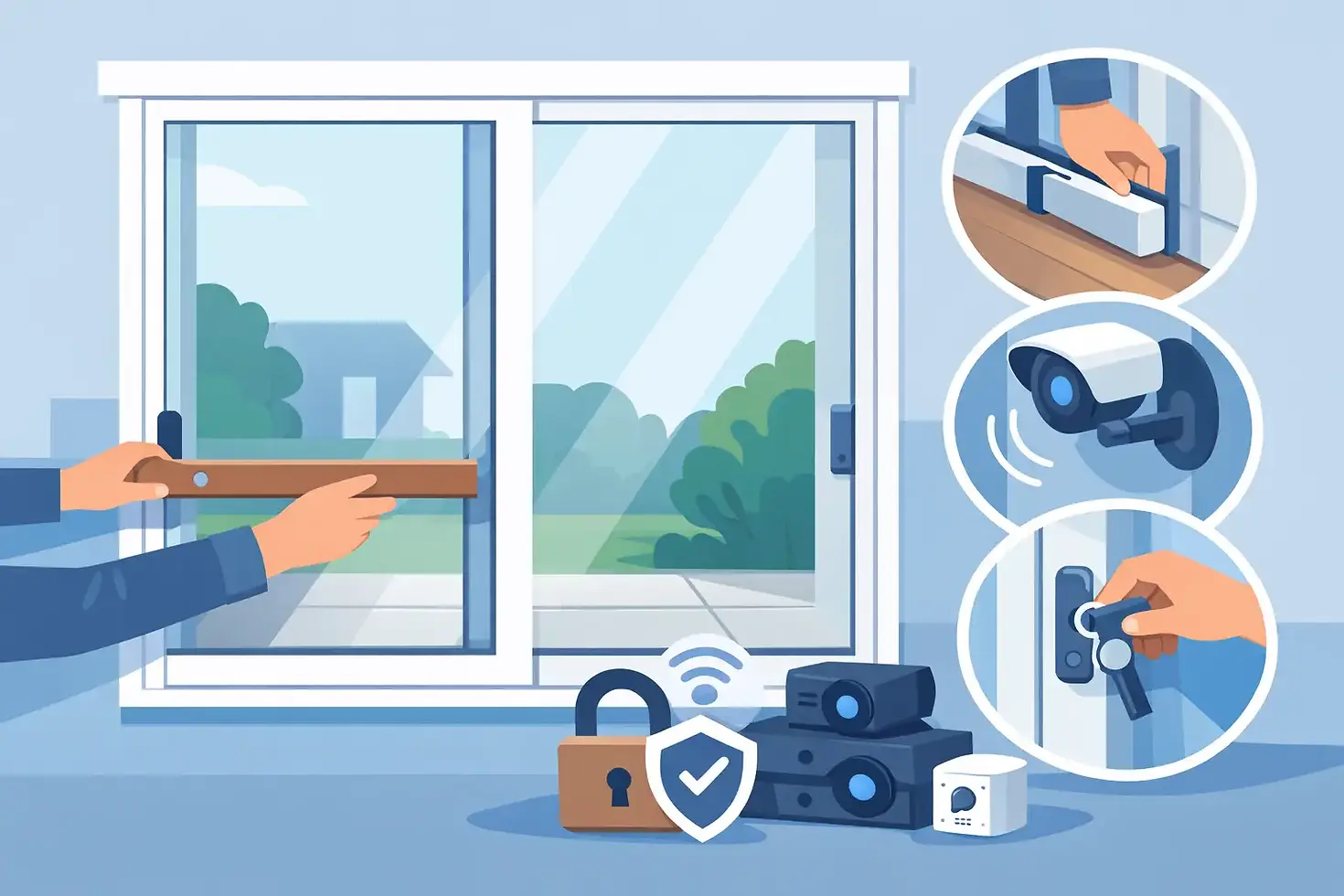
A secondary lock is one of the most effective additions. Options include a keyed sliding-door lock, a pin lock that joins the moving panel to the frame, or a foot-operated lock installed near the bottom track. A pin lock can be especially useful because it physically prevents the panel from moving, even if someone defeats the original latch.
Choose a lock that fits your door material and track design. A lock that is difficult for your family to use may get skipped, while a poorly installed lock can damage the frame or fail when needed. For a business, select hardware that supports safe emergency exit requirements and local building codes.
Add a Security Bar or Dowel
A security bar placed in the bottom or upper track prevents the door from sliding open. This simple measure remains popular because it is affordable, visible, and effective against a forced opening attempt.
A properly sized metal bar is generally more reliable than a loose piece of wood. If you use a wooden dowel as a temporary solution, cut it so it fits snugly in the track without pushing against the glass or preventing proper door alignment. Remove the bar before opening the door, and make sure everyone in the household knows where it is kept.
Security bars do have one trade-off: they can slow down an emergency exit. For doors used as a primary escape route, choose an option that can be removed quickly from inside and practice using it.
Reinforce the Door Frame and Track
Sliding doors do not always fail at the lock. A door with worn rollers, a bent track, or a loose frame can be lifted or pried more easily than it should be. Inspect the track for dirt, debris, and damage, then make sure the door rolls smoothly and sits correctly in the frame.
Many sliding doors can be adjusted at the bottom rollers. When the door is properly adjusted, there is less space between the panel and frame, making it harder to lift the door out of its track. If you are unsure how to make the adjustment, a door professional can confirm whether the rollers, track, or frame need repair.
Anti-lift devices provide another layer of protection. These small brackets or blocks are mounted at the top of the frame to limit how far the door can be raised. They are particularly worthwhile for older doors or doors that show a noticeable gap at the top when closed.
Protect the Glass, Not Just the Opening Mechanism
Even a well-locked door can be vulnerable if a person can break the glass and reach the lock. The right glass protection depends on your budget, local weather conditions, and whether the door is in a highly visible or secluded location.
Security window film is a practical upgrade for many properties. It holds broken glass together longer after impact, which can delay entry and create noise and attention. It is not the same as unbreakable glass, and it should not be treated as a replacement for locks or alarms. Its value is in buying time.
For higher-risk areas, laminated safety glass or impact-rated doors offer stronger protection. These upgrades cost more, but they may make sense for a ground-floor patio door, a rear business entrance, or a property where the sliding door faces a hidden yard or alley.
Keep furniture, tall planters, and other climbing aids away from the exterior of the door. Good landscaping should support security, not provide cover. Trim shrubs that block the view of the door from the street, neighbors, or interior rooms.
Use Door Sensors for Immediate Awareness
A door contact sensor tells you when a sliding door opens. It is one of the simplest smart security additions, but it provides meaningful peace of mind. When the system is armed, an opening door can trigger an alarm. When the system is disarmed, you can still receive an alert if the door opens unexpectedly.
This is useful for families with children, pet owners, and business operators who want to know when staff or customers use a rear entrance. A sensor also helps address a common problem: realizing too late that someone left the sliding door unlocked or partially open.
Place the sensor so the magnet and contact align fully when the door is closed. Test it after installation and again after any door adjustment or repair. If the door has a screen panel, remember that the screen is not a security barrier and should not interfere with the sensor’s function.
Add Cameras Where They Can Be Seen and Used
A visible outdoor camera near a sliding door can discourage unwanted activity, while recorded footage can help document what happened if an incident occurs. Camera placement matters more than simply adding more devices.
Aim the camera at the approach to the door rather than directly at the glass. This gives you a better view of faces, movement, and the route someone takes to reach the entry point. Avoid positioning it where direct sunlight, porch lights, or reflections regularly wash out the image.
For a home, a camera with motion alerts lets you check activity around a patio or backyard door before opening it. For a small business, cameras can help cover receiving areas, rear entrances, and after-hours access. Use signs where appropriate, and respect privacy expectations around neighboring properties.
Improve Lighting Around Patio and Rear Doors
Poor lighting gives an intruder cover and makes it harder for you or a camera to see what is happening. Motion-activated lighting is a straightforward way to make a patio, deck, side yard, or rear entrance less inviting after dark.
Install lighting high enough to limit tampering and direct it toward walkways and approach paths. Bright lights pointed straight at the door can create reflections that reduce visibility from inside, so aim for even coverage around the area instead. Replace burned-out bulbs promptly and test motion settings seasonally.
Make Daily Use Part of Your Security Plan
The most effective equipment does little if it is not used consistently. Lock the sliding door whenever it is closed, even if you are home or stepping away briefly. Close blinds or curtains at night when the room is unoccupied, especially if valuables are visible from outside.
Before leaving for work, closing a business, or going to bed, check the latch, secondary lock, and security bar. A short routine can prevent the kind of oversight that creates an easy opportunity. If you use a smart security system, create an arming routine that includes confirmation that exterior doors are closed.
Avoid hiding spare keys near the patio or relying on a screen door as protection. If trusted visitors need access, a smart lock on another entry door or a managed access code is usually safer than leaving a key outside.
Get Help When the Door Needs More Than a Quick Fix
Some problems call for professional attention: a door that will not latch, a frame that flexes, damaged glass, persistent track issues, or a security system that needs integrated sensors and cameras. Addressing these concerns early can be less expensive and far less stressful than responding after a break-in.
Authorized Home Security can help homeowners and small business owners choose alarm, camera, and smart home options that fit the property rather than adding technology for its own sake. The goal is clear awareness, dependable protection, and equipment that is simple enough to use every day.
Your sliding door should remain a convenient way to enjoy your space, not a source of worry. A secure lock, a reinforced track, visible deterrents, and timely alerts can turn that wide glass opening into a well-protected part of your property.


Comments