
The Best Security Upgrades After a Burglary

A burglary changes the way a property feels. A door that once seemed ordinary can suddenly feel like the weak point, and every unfamiliar sound may raise concern. The best security upgrades after burglary should do more than add equipment. They should address how the intruder got in, improve your ability to respond, and help your household or business regain confidence.
The right plan is rarely about buying every available device. It is about closing the vulnerabilities revealed by the incident and building dependable layers of protection around the property.
Start With the Point of Entry
Before replacing locks or choosing a camera system, look closely at how access was gained. Was a door forced open? Was a window left unsecured? Did someone enter through an attached garage, a side gate, or an area with poor visibility? The answer should guide your next steps.
If police documentation, photos, or insurance records are available, keep them organized. They can help you identify damage and support a more informed conversation with a security professional. Avoid making assumptions based only on what seems likely. A thorough review of doors, windows, exterior lighting, fencing, and access habits often reveals more than one area worth improving.
For small business owners, also consider keys, codes, employee access, and delivery routines. A burglary may expose a physical weakness, but it can also reveal that too many people have access to the building.
Best Security Upgrades After Burglary: Prioritize Layers
A stronger property uses several connected safeguards. Physical security makes entry harder. Detection devices alert you when someone tries. Cameras provide visibility, while professional monitoring can help ensure an alarm event is not missed when you are asleep, traveling, or busy with customers.
Upgrade Exterior Doors and Locks
Doors deserve immediate attention because they are a common entry point. Replace compromised locks rather than simply repairing them, and rekey locks if keys were stolen or cannot be accounted for. Deadbolts, reinforced strike plates, longer mounting screws, and solid door frames can make a meaningful difference against forced entry.
A smart lock can add convenience and better control, especially for families, rental properties, or businesses. You can update access codes instead of tracking down physical keys and create separate codes for trusted visitors or staff. However, smart locks should complement, not replace, a strong door and properly installed hardware.
Do not overlook secondary doors. Garage entry doors, back doors, basement doors, and doors from garages into the home should receive the same attention as the front entrance.
Add a Professionally Monitored Alarm System
An alarm system is often the most valuable next step after a break-in because it turns an attempted entry into an active event. Door and window sensors can detect openings, while motion detectors help cover interior areas that may not have direct sensors. A loud alarm may discourage someone from staying on the property, and professional monitoring provides another level of support when an alarm is triggered.
The best setup depends on the layout. A compact home may need a focused system covering entrances and key interior spaces. A larger home, storefront, office, or warehouse may need zones that distinguish customer areas, stockrooms, offices, and exterior access points.
Professional installation is a practical choice when you want help placing devices correctly and confirming that the system works as intended. Self-installation can be a good fit for customers who prefer a more hands-on option, particularly in smaller properties. What matters most is that sensors are placed where they can protect real access points, not simply where they are easiest to install.
Install Security Cameras Where They Add Visibility
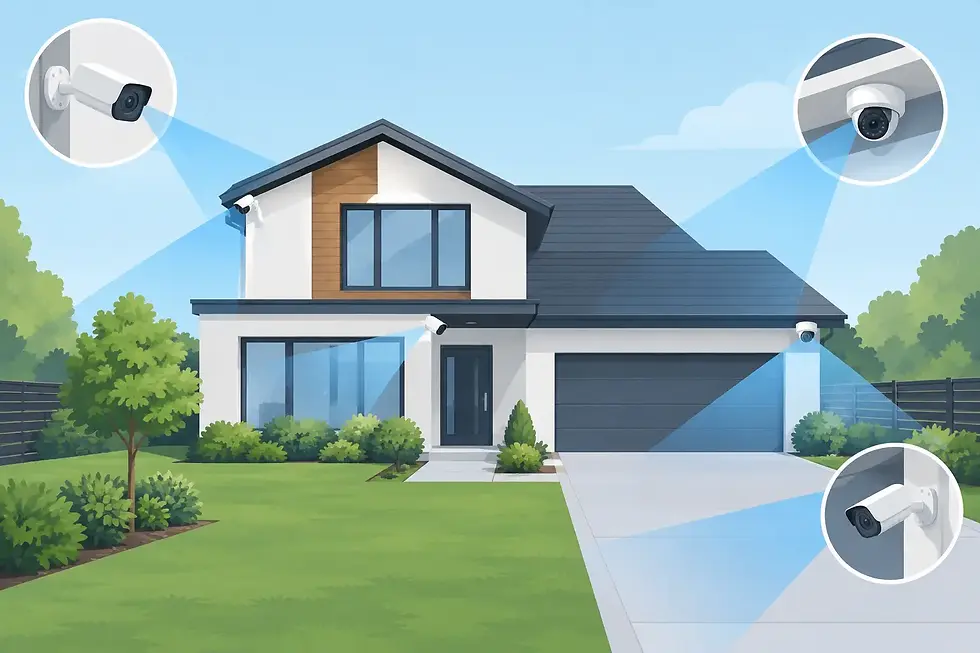
Security cameras are most useful when they cover the approach to your property and the areas an intruder is most likely to use. For a home, that usually means front and back entrances, driveways, garages, side yards, and gates. For a business, entrances, parking areas, receiving doors, cash-handling areas, and inventory spaces may be priorities.
A visible camera can discourage unwanted activity, but placement matters more than the number of cameras. Position cameras high enough to limit tampering while still capturing useful facial and vehicle details. Good lighting is essential, even when a camera has night vision. Test the view during the day and after dark, and make sure shrubs, signs, or parked vehicles do not block key angles.
Video doorbells can be especially helpful for front-door activity, deliveries, and visitors. They are not a complete camera plan for every property, but they can add useful awareness at a high-traffic entrance.
Protect Windows and Less Obvious Access Points
Windows are often overlooked after a burglary, particularly those hidden by landscaping or located along the side or rear of a property. Window sensors can alert you when protected windows are opened. Depending on the property, glass-break detection may add coverage for windows that could be broken rather than opened.
For ground-level windows, consider quality window locks and ensure they are used consistently. Basement windows, sliding doors, and garage windows need the same review. If a window is obscured from neighbors or the street, improved lighting and camera coverage may be just as valuable as hardware upgrades.
Improve Exterior Lighting and Property Awareness
Lighting does not replace an alarm system, but it reduces hiding places and helps cameras capture clearer footage. Motion-activated lights work well near driveways, rear doors, side paths, gates, and detached structures. Steady lighting can be better for areas where people regularly walk, such as a business entrance or a frequently used walkway.
Keep landscaping trimmed near windows, doors, and cameras. Trees and shrubs should not give someone concealment or block a camera's view. For businesses, review exterior lighting from the parking lot after closing time. What looks adequately lit during the afternoon can feel very different at night.
You can also use smart home controls to make the property look occupied when you are away. Timed lights and remote notifications add convenience, but they work best as part of a larger security plan rather than as a stand-alone deterrent.
Review Access, Routines, and Emergency Plans
Technology is more effective when everyone knows how to use it. After a burglary, update alarm codes, smart lock codes, Wi-Fi passwords connected to security devices, and any shared access permissions. Remove old users from apps and accounts. If a key, fob, or garage remote was taken, replace or reprogram it promptly.
Talk with household members about arming the system, responding to alerts, and avoiding common mistakes such as leaving doors unlocked during quick errands. For a small business, designate who opens and closes, who receives alerts, and what staff should do if an alarm occurs. Keep these instructions simple enough to follow under stress.
It may also help to set expectations about notifications. A camera alert every time a pet walks through the yard can lead people to ignore alerts altogether. Adjust settings so the system provides meaningful information without becoming background noise.
Choose Support That Fits Your Property
After a burglary, it is understandable to want a solution immediately. Still, a rushed purchase can leave important areas uncovered or add equipment that is difficult to manage. A guided security assessment can help identify the right combination of alarm monitoring, cameras, smart access, and professional installation for your home or business.
Authorized Home Security helps customers choose security solutions based on the property, daily routine, and protection goals. Whether you prefer professional installation or a self-install option, the goal is the same: a system that is understandable, dependable, and ready when it matters.
A burglary should not force you to live on edge. Begin with the entry points, add detection and visibility where they will have the greatest effect, and choose support you can count on. Each practical improvement is a step toward making the property feel like yours again.


Comments